

The Promise vs. Reality of Casino Bonusy for Travel Costs
Every year, thousands of travelers searching for ways to offset car rental costs stumble across casino bonus offers promising free cash, free spins, and easy winnings. On the surface, it sounds like a clever workaround: collect a few hundred in casino credits, cash out, and cover your next car rental booking. The reality is quite different, and understanding why can save you from a frustrating, costly mistake before your next trip.
The car rental market has changed dramatically in recent years. Between surge pricing, mandatory insurance add-ons, and fuel policies that vary by company, travelers need genuinely reliable strategies to manage costs. Casino bonusy are not among them — and here's the detailed, honest breakdown of why.

Before diving into what actually works, it helps to understand why casino bonusy attract so many people in the first place. They are engineered to look like free money, and the marketing behind them is genuinely sophisticated. A "200% welcome bonus up to €500" sounds like a nearly guaranteed windfall. But every serious casino review rating system flags these offers not for their headline number, but for the conditions buried inside the terms — conditions that make the real cash value a fraction of what the promotional banner suggests.
How Wagering Requirements Turn Bonuses Into Financial Traps
The Mechanics of Playthrough Conditions
Most casino bonuses come attached to what the industry calls a wagering requirement — sometimes also called a playthrough requirement. This means you must bet the bonus amount (or the bonus plus deposit) a set number of times before any resulting balance becomes withdrawable as real money. A typical requirement sits between 30x and 50x. On a €100 bonus with 40x wagering, you must place €4,000 in total bets before touching a single euro of that balance.
Reputable casino review ratings consistently penalize platforms that hide their wagering requirements in hard-to-find terms, use unusually high multipliers, or apply differential game contribution rates that make meeting the requirement nearly impossible. When you see a site rated 3 out of 10 by an independent reviewer, this is almost always a major contributing factor. Reading those ratings before engaging with any bonus offer is not optional — it is essential protection against platforms designed to harvest deposits rather than reward players.
- 30x wagering — considered moderate and technically achievable, though still statistically unfavorable for the average player
- 40x wagering — the industry average; beating it consistently over time is not a realistic expectation
- 50x or higher — effectively means the bonus carries no meaningful cash value whatsoever
- Game contribution restrictions — slots often count 100%, while table games may count only 10% toward the total requirement
- Time limits — the bonus expires before wagering completes, locking or forfeiting your entire balance
- Maximum bet rules — exceeding a per-spin or per-hand ceiling during wagering voids the entire bonus instantly
The Expected Value Calculation Nobody Shows You
Here is the math that casino platforms prefer you do not run. A slot machine with 96% RTP (return to player) sounds like you keep 96 cents of every euro wagered — but that figure applies per individual spin, not over the cumulative sequence required to clear a wagering requirement. Over 40x wagering on a €100 bonus, your expected loss is roughly 4% of €4,000 in total bets, equaling €160. You started with €100 in bonus money. After statistically typical outcomes, you are down €60 before you even attempt a withdrawal. This is precisely why thorough casino review ratings run expected value calculations rather than simply listing headline bonuses as if they were face-value cash. You can find more information here about how independent review platforms conduct this analysis.
Some players get lucky, of course. But luck is not a strategy for covering a predictable travel expense like a car rental reservation — which comes with a set date, a set price, and no tolerance for variance. Planning your rental budget around gambling outcomes is the equivalent of planning your mortgage around lottery tickets. One fortunate session doesn't change the underlying mathematics that govern every session that follows it.
What Casino Review Ratings Actually Evaluate
The Six Pillars of a Trustworthy Rating
If you're going to interact with any online casino platform at all — even just to assess whether a bonus is legitimate — knowing how review systems grade them protects you from the worst operators. High-quality casino review ratings don't simply check whether a site looks professionally designed. They evaluate a specific set of operational standards that determine whether a player ever sees real money leave the platform.
- Licensing and jurisdiction — Operators licensed under the Malta Gaming Authority or UK Gambling Commission face regular audits and player protection standards that offshore jurisdictions simply do not impose.
- Payout speed — Verified average withdrawal times under 24 hours indicate a platform that isn't artificially throttling cash-out processing to discourage withdrawals.
- Wagering requirements — As covered above, this is where most bonuses collapse in practice. Casino review ratings of 8 out of 10 and above typically require sub-35x conditions with fully transparent game contribution tables.
- Customer dispute resolution — Does the platform have a documented track record of resolving player complaints fairly? Independent watchdog organizations track this data systematically over time.
- Game fairness certification — eCOGRA, iTech Labs, and GLI seals indicate that RTP figures have been independently audited, meaning the numbers published are the numbers actually running in production.
- Responsible gambling tools — Deposit limits, self-exclusion mechanisms, and session time alerts are baseline requirements at every well-rated platform and signal a serious, player-oriented operation.
Platforms that score consistently well across all six of these dimensions might theoretically offer bonuses worth examining more carefully — but even then, expected value rarely exceeds zero for an average player over time. Sites that score poorly are actively predatory, and their bonuses are engineered to extract deposits rather than generate player returns. For comparative scoring across platforms, the aggregator https://czkasino.cz/ compiles ratings from multiple independent review sources in one place.
Bonus Types Ranked by Real-World Withdrawal Value
Not all casino bonuses are equally problematic for a cash-out strategy. Casino review ratings track which bonus structures have historically produced the best results for players who approach them systematically. Understanding the hierarchy helps you avoid the worst traps, even if the fundamental conclusion remains unchanged: none of these are reliable mechanisms for covering a defined car rental expense with a fixed due date.
| Bonus Type | Typical Wagering | Realistic Cash Value | Casino Rating Impact |
|---|---|---|---|
| No-deposit free spins | 50x–80x on winnings | Very low (€5–€15 realistic) | Negative if conditions excessive |
| Welcome deposit match | 30x–50x | Negative expected value | Core rating factor |
| Reload bonus | 25x–40x | Marginally better, still statistically unfavorable | Moderate |
| Cashback (no wagering) | 0x — direct return | Positive — face value returned on losses | Strongly positive signal |
| Loyalty tier rewards | Varies by tier and platform | Low unless high-volume player | Moderate positive |
The only category in that table with genuinely positive cash value is cashback with no wagering requirement — and those are rare, typically capped at small amounts, and restricted to existing customers who already have a substantial deposit history on the platform. No new player signing up specifically to fund holiday travel costs will find these terms available from day one.
Proven Strategies That Actually Reduce Car Rental Costs
Credit Card Travel Benefits: Where the Real Savings Live
While casino bonuses drain money through wagering requirements, travel credit card rewards generate genuine value without any statistical house edge working against you. Premium travel cards routinely offer sign-up bonuses equivalent to €200–€500 in travel credits — activated simply by meeting a spending threshold (typically €3,000 over 90 days) on purchases you were already planning to make. Unlike casino earnings, these rewards accumulate on money you were spending regardless of any reward program, not on new risk capital deployed at a mathematical disadvantage.
Many premium cards also include complimentary car rental insurance as a standing benefit — a feature that eliminates one of the most significant cost traps at the rental counter. Collision damage waiver charges from rental companies commonly add €15–€30 per rental day to a total bill. If your credit card's built-in coverage eliminates that fee entirely, you are saving real, predictable money on every reservation. Experienced renters who follow smart rental tricks consistently identify card-based insurance coverage as one of the highest-value moves available to any traveler.
Booking Timing and Platform Selection
The price of a car rental is not fixed — it fluctuates based on demand, lead time, vehicle class availability, and pickup location. Several consistently reliable strategies emerge from systematically tracking rental pricing across markets:
- Book 2–3 weeks in advance for leisure travel — rates typically drop after initial high-demand windows close, then rise sharply in the final week before pickup.
- Compare off-airport locations — rental desks inside terminals charge mandatory facility fees that add 15–25% to the base rate. A short shuttle ride to an off-site lot often saves more than any promotional bonus could realistically deliver after wagering.
- Use aggregator platforms — comparing rates across multiple companies takes five minutes and regularly surfaces 20–30% price differences for identical vehicles on identical dates.
- Avoid one-way surcharges when possible — returning a vehicle to the same pickup location eliminates a substantial drop-off fee that many travelers don't discover until the final checkout screen.
- Decline counter add-ons selectively — GPS units, prepaid fuel packages, and bundled roadside assistance are almost always cheaper if arranged independently or simply skipped for short urban trips.

These savings compound when applied consistently. The difference between a traveler who checks all these boxes and one who books the first result and accepts every counter add-on can easily reach €200–€400 on a typical week-long European road trip — entirely reliable, repeatable savings that no casino review rating could promise you from a bonus offer structured around wagering requirements and house-edge mathematics.
Loyalty Programs That Deliver Genuine Value
Unlike casino loyalty schemes — which require significant gambling volume to yield modest returns, and which casino review ratings regularly flag for opaque tier structures and hard-to-reach redemption thresholds — car rental loyalty programs generate value from the moment you enroll. Free membership, guaranteed vehicle upgrades after a threshold number of rentals, and dedicated pickup counters that bypass standard queues all represent time and money saved without any variance or mathematical disadvantage involved.
Several major rental loyalty programs also partner directly with airline miles schemes, hotel points ecosystems, and credit card reward platforms — creating a compounding benefit structure that is simply unavailable through casino reward systems. For comprehensive planning around how to stack these benefits effectively on your next trip, a thorough 2026 car rental guide will walk you through the most effective combinations currently available.
Building a Realistic Travel Budget Around Rental Costs
The Line Items That Consistently Surprise Renters
One reason travelers reach for casino bonusy as a supplemental income strategy is that car rental costs are genuinely higher than initial quotes suggest — and much of the extra spend arrives as line items that never appear in the advertised base price. Knowing what to expect removes the financial shock that makes implausible strategies look attractive.
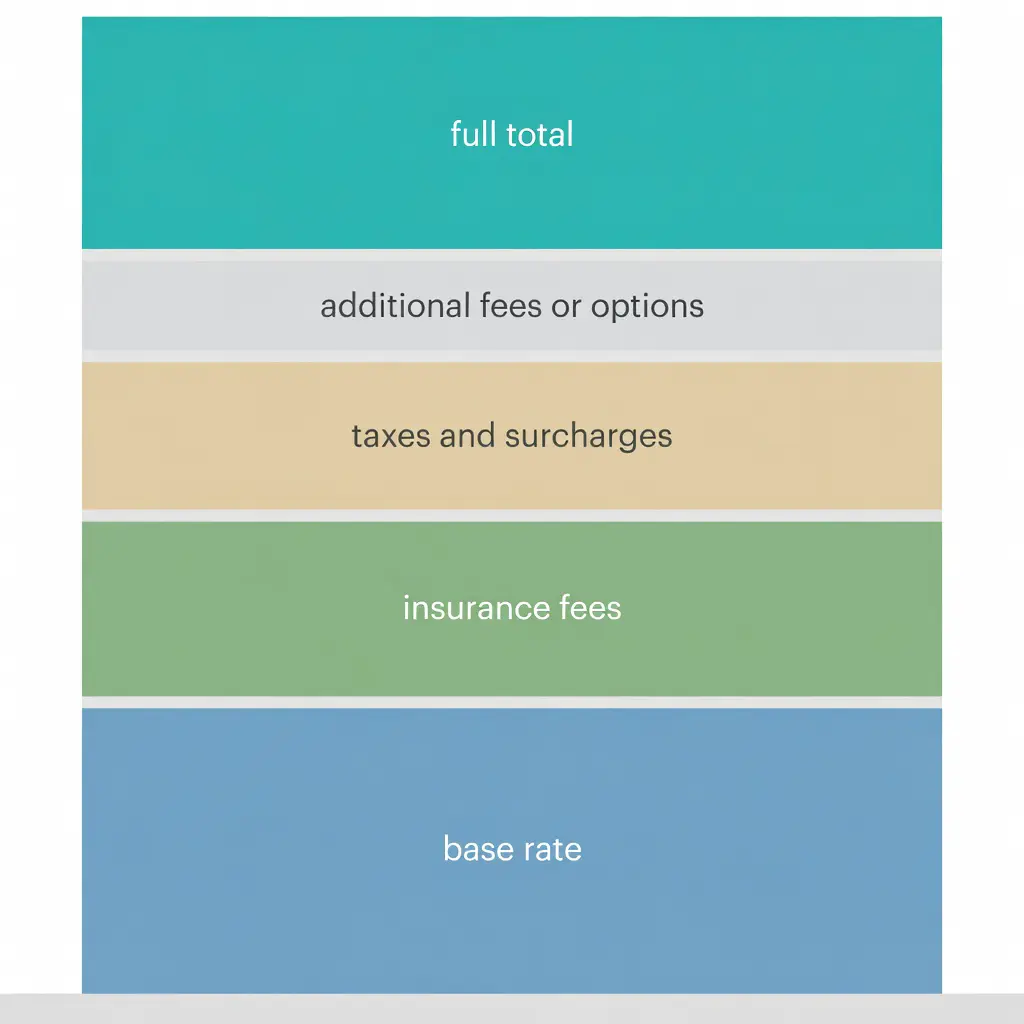
Airport surcharges, mandatory liability insurance, young driver fees, additional driver fees, and cross-border charges — standard in European rentals where drivers frequently cross into neighboring countries — can collectively double the advertised rate. рейтинги онлайн-казино apply a structurally similar analytical lens when evaluating platforms: the advertised bonus sounds generous until every applicable condition is layered on, revealing that the real accessible value is a fraction of the headline number. Both industries lead with a figure that sounds significantly better than the true cost of accessing it.
A Practical Pre-Trip Cost Checklist
To build an accurate car rental budget before you travel, work through the following line items systematically. Each one represents a potential cost that the quoted base rate does not include by default, and each has the potential to materially change your total spend:
- Base rental rate — confirm whether the price displayed is per day or the cumulative total for your full rental period.
- Collision damage waiver — verify whether your credit card already covers this before purchasing it from the rental company at the counter.
- Liability insurance supplement — legally required in many jurisdictions; may or may not be bundled into the base rate depending on the specific operator and country.
- Airport surcharge — typically 10–25% added to any rental picked up directly from an airport terminal desk or facility.
- Young or senior driver fees — drivers under 25 or over 70 commonly face daily surcharges at major rental companies regardless of their personal driving record.
- Additional driver fee — adding a second named driver typically costs €10–€15 per day unless specifically waived by your premium credit card agreement.
- Fuel policy — "full to full" is the least financially risky option; avoid prepaid fuel packages unless you are highly confident you will return the vehicle below a quarter tank.
- Cross-border permission fee — driving across country borders in Europe requires advance approval from most rental companies and often carries a one-time administrative charge.
Why the Casino Route Reliably Costs More Than It Returns
There's a psychological dimension to casino bonus offers that makes them more dangerous than a simple bad deal. Unlike a car rental surcharge — which appears as a visible line item you can plan for and either accept or decline — wagering requirements work through time, sustained attention, and sunk-cost psychology. You invest hours of gameplay chasing a withdrawable balance, and each session deepens your emotional investment in the outcome. Thorough casino review ratings that penalize platforms for predatory interface design are identifying exactly this dynamic: the platform is built to make quitting feel like losing, even when quitting is the mathematically rational choice.
The travel budget consequence is concrete. Every hour spent chasing a casino withdrawal is an hour not spent comparing rental rates, reviewing policy terms, or deploying the legitimate reward systems that consistently deliver real savings. The opportunity cost of a gambling strategy isn't only the expected monetary loss — it's the displacement of productive planning time with an activity that carries negative expected value by design. That trade-off rarely feels significant in the moment, which is precisely why it's worth understanding clearly before it happens.
Conclusion: What Actually Moves the Needle on Rental Costs
The appeal of casino bonusy as a travel cost offset is understandable — the marketing is genuinely well-executed, and headline numbers sound plausible until you examine the full conditions. But the expected value math, the mechanical structure of wagering requirements, and the consistent findings of independent casino review ratings all point to the same conclusion: these bonuses are designed to generate platform revenue, not player profit. Building a car rental budget around anticipated casino withdrawals is building on a foundation that statistically fails the average player before a single reservation is confirmed.
The strategies that genuinely work are less glamorous but entirely reliable. Travel credit cards with rental insurance and sign-up bonuses eliminate real, predictable costs without any variance or house edge. Rate aggregation platforms surface meaningful price differences across providers in minutes. Off-airport pickup locations remove mandatory facility surcharges that inflate total spend invisibly. Rental loyalty programs deliver consistent upgrade and points benefits that compound naturally over time. These are not hacks — they are straightforward applications of existing systems that reward informed planning rather than luck.
Understanding the full cost picture for any car rental — including every surcharge, add-on insurance product, and optional service you'll be offered at the counter — is the foundation of every effective travel savings strategy. Serious casino review ratings exist precisely to protect people from platforms that obscure their true cost structure behind attractive headline offers. Applying the same critical mindset to car rental bookings — reading the full terms, comparing verified total prices rather than base rates, and choosing the option with the best demonstrable value — will save you far more reliably, and far more predictably, than any bonus offer ever will.



Comments
I never realized how drastically wagering requirements can eat up a casino bonus—reading that €100 could effectively turn into a €60 loss before withdrawal really puts the risk into perspective.
I didn’t realize how much the hidden fees on airport rentals could add up—makes sense now why relying on casino bonuses is such a gamble for covering costs.
I didn’t realize how quickly those wagering requirements eat up any bonus—makes total sense why relying on them for a car rental is risky.
That 40x wagering example (€4,000 in bets on a €100 bonus) really puts it in perspective. I’ve also been burned by max-bet rules buried in the terms, so yeah, not something you can count on for a fixed car rental bill.
That example of a €100 bonus needing €4,000 in bets really put it in perspective. When you say credit card rental insurance can replace the CDW, does it usually cover windshield/tires too or just collision?